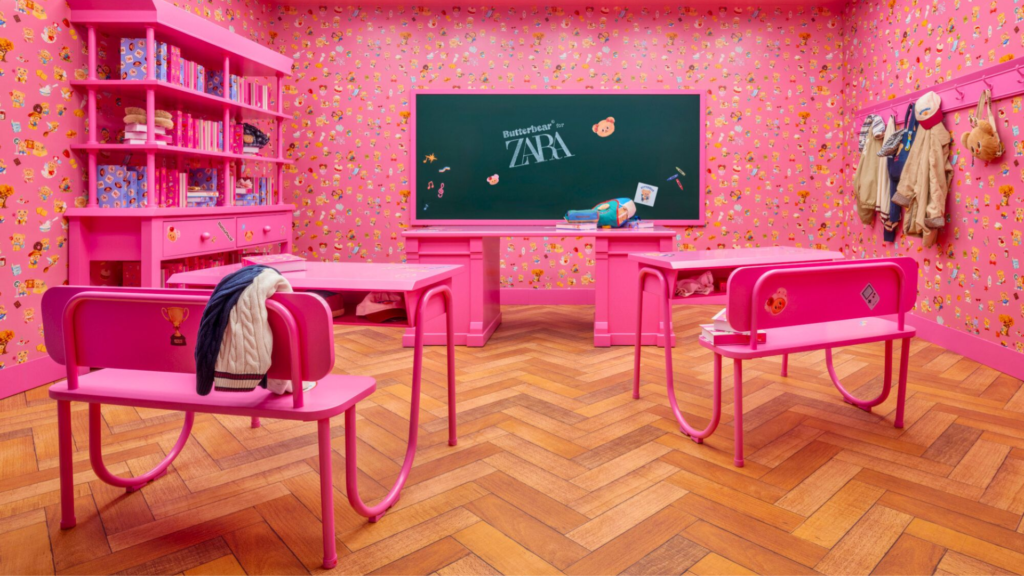




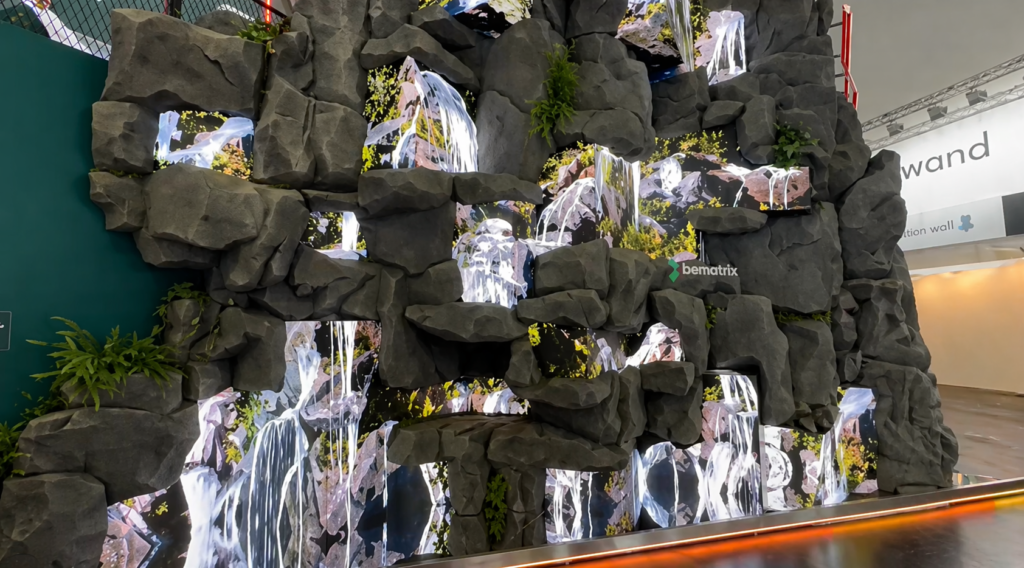
In today’s retail landscape, invisible experience has become one of the most powerful drivers of differentiation. More than products or pricing, it is the subtle — often imperceptible — stimuli that shape how consumers feel and ultimately make decisions at the point of sale.
The customer experience in physical retail goes far beyond what is visible. It is built through a combination of implicit elements that operate quietly, yet effectively, in shaping perception and influencing behavior.
These elements, while often unnoticed at a conscious level, play a decisive role in how consumers interpret environments, connect with brands, and move toward purchase decisions.
When analyzing consumer behavior in-store, it becomes clear that most decisions are not purely rational. Emotions, sensations, and perceptions have a direct influence — and it is precisely these invisible factors that brands must learn to design intentionally.
In this context, the concept of invisible experience in retail emerges as a strategic layer of the customer journey — operating behind the scenes and subtly guiding consumers along their path to purchase.
Invisible experience in retail: what is not seen, but felt
Even before interacting with products or sales staff, consumers are already being influenced by a range of stimuli that shape their perception.
The experience begins with the environment — its atmosphere, organization, and overall spatial design.
Much of the customer experience in physical retail is the result of these implicit constructions. They do not require conscious attention, yet they directly impact how consumers feel, behave, and make decisions throughout their journey.
Understanding the customer journey from this perspective means recognizing that every detail matters — and that often, the most subtle elements create the greatest impact.
Invisible experience: how atmosphere influences consumer behavior
The atmosphere of a retail space functions as a non-verbal narrative. Before any explicit communication takes place, consumers are already interpreting signals that shape their perception of the brand.
Sensory elements — including lighting, music, scent, temperature, and color — form a system of stimuli that directly influences mood, dwell time, and purchase intent.
A brightly lit store may convey clarity and modernity, while softer lighting creates comfort and intimacy. Similarly, soundscapes and fragrances build emotional associations that remain in memory long after the visit.
These elements not only reinforce brand positioning but also subtly guide the rhythm of the customer journey. Dynamic environments tend to accelerate decisions, while more welcoming spaces encourage exploration and longer visits.
When strategically designed, atmosphere becomes a powerful tool in shaping the invisible experience, transforming retail environments into coherent and emotionally engaging spaces.
Invisible experience in microinteractions with customers
If atmosphere defines the tone, microinteractions give depth to the experience.
Small gestures — often considered operational details — have a significant impact on how consumers perceive both service and brand.
A timely approach, attentive behavior, and availability without intrusion all contribute to a more human and relevant experience.
These moments directly influence in-store behavior, creating feelings of trust, comfort, and appreciation.
The difference between an ordinary and a memorable experience rarely lies in large-scale actions. Instead, it is found in these small touchpoints that communicate care and intentionality.
Additionally, well-designed microinteractions reduce friction across the journey, making navigation smoother and more intuitive. They act as invisible facilitators, guiding consumers without interrupting their experience.
Invisible experience and choice architecture in retail
The organization of physical space is one of the most strategic elements in shaping the invisible experience.
From product placement to traffic flow, every detail influences how consumers interact with the environment.
The concept of choice architecture is based on the idea that decisions can be guided through environmental design. By structuring spaces intelligently, brands can simplify navigation, highlight key products, and lead consumers through more intuitive journeys.
For example:
- Products placed at eye level gain higher visibility
- Fluid pathways encourage exploration
- Focal points direct attention
Rather than simply organizing space, this approach reduces cognitive effort. When the environment “works by itself,” the experience becomes more enjoyable — and decision-making becomes easier.
Story Listening: understanding the invisible to design better experiences
If invisible experience is built through subtle signals, its evolution depends on a brand’s ability to interpret them.
This is where the concept of Story Listening becomes essential.
Unlike traditional storytelling, which focuses on brand narratives, Story Listening shifts the focus to the consumer — capturing insights through behavior, interactions, and patterns.
In physical retail, this happens through data such as:
- Dwell time
- Customer pathways
- Product interactions
- Drop-off points
These insights reveal more than declared opinions — they show how consumers actually behave.
By integrating Story Listening into strategy, brands can continuously refine the invisible experience in retail, aligning it with real customer expectations and needs.
This transforms the store into a dynamic environment — one that learns, adapts, and anticipates.
From intention to impact: why invisible experience must be strategic
If everything communicates, nothing can be left to chance.
Invisible experience is not accidental — it is the result of deliberate design.
Every element, no matter how subtle, must align with a clear objective and contribute to a cohesive customer journey.
This requires an integrated approach, where all touchpoints work together. It is not enough to create isolated moments of delight — consistency across the entire journey is essential.
As brands scale, maintaining this consistency becomes more complex. This is where the concept of scalable experiences becomes critical.
These are experiences designed to reach large audiences without losing quality, consistency, or purpose — enabled by structured processes and technology.
By structuring the invisible experience strategically, brands transform subjective elements into replicable assets.
Atmosphere, microinteractions, and spatial design become part of a consistent experience system — adaptable, yet aligned with brand identity.
Conclusion
The impact of invisible experience goes far beyond immediate conversion.
It shapes perceived value, strengthens brand identity, and drives long-term customer loyalty.
These subtle layers are what transform interactions into lasting relationships.
In physical retail — where experience is a key competitive advantage — understanding and applying these elements is no longer optional. It is a strategic necessity.
Because in the end, what consumers remember is rarely what they saw — but what they felt.
Inscreva-se em nossa Newsletter
Receba no seu email todas as novidades do nosso blog sobre tecnologia e varejo, além de ficar por dentro do novos projetos Alice Wonders.
Thank you for subscribing.
Something went wrong.
Respeitamos sua privacidade e levamos a sério a sua proteção