



Retail neuroscience has transformed the way brands understand consumer behavior at the point of sale. While retail traditionally operated under the assumption that purchasing decisions were primarily rational, studies now show that most choices happen automatically, emotionally, and unconsciously.
This is where retail neuroscience becomes especially relevant. By investigating how the brain reacts to environmental stimuli, it reveals that attention, emotion, and memory play a decisive role in the customer journey.
Inside physical retail environments, this dynamic becomes even more evident. Consumers are exposed to multiple stimuli simultaneously, making countless micro-decisions within just a few minutes — often without realizing it.
As a result, understanding consumer behavior at the point of sale is no longer simply about analyzing habits. It becomes a deeper interpretation of how the brain processes information, filters stimuli, and decides what deserves attention.
In this context, influencing decisions does not mean manipulation. Instead, it means reducing friction, simplifying choices, and creating more intuitive and relevant experiences. With that in mind, this article explores how retail neuroscience works and how it can be strategically applied within physical retail environments.
Retail neuroscience: how the consumer brain reacts in-store
The point of sale is a cognitively complex environment. The brain must deal with information overload, multiple choices, and limited time. To manage this, it activates mental shortcuts that simplify decision-making.
These shortcuts are primarily guided by three pillars:
- Attention
- Emotion
- Memory
Understanding how these elements function is essential for applying neuroscience-based retail strategies effectively.
Retail neuroscience and attention in physical retail
Attention has become one of the most valuable — and scarce — resources in modern retail. At the point of sale, dozens of brands compete simultaneously for only a few seconds of consumer focus.
To handle information overload, the brain filters what appears most relevant. This filter is not rational; instead, it is based on patterns such as contrast, novelty, movement, and simplicity.
This means that influencing consumer behavior in-store requires more than simply being present — brands must be noticed. Strategic lighting, contrasting colors, visual organization, and clear hierarchy help direct attention and highlight products more effectively.
More importantly, the challenge is not only attracting attention, but guiding it. A well-designed retail environment intuitively leads consumers through the space, reducing cognitive effort and increasing engagement opportunities.
How retail neuroscience influences emotions in retail
Although consumers often justify their choices logically, the decision itself is strongly emotional. The brain quickly evaluates whether something “feels right,” “makes sense,” or “creates desire” before any rational analysis occurs.
Within retail neuroscience, this means emotional connection is one of the most effective ways to influence consumer behavior and purchasing decisions.
Comfortable environments, positive brand associations, and immersive experiences increase neurotransmitter activity linked to pleasure and reward, directly impacting purchase intent.
Emotional states also influence value perception. A well-crafted experience can make products feel more desirable and justify premium pricing. For this reason, investing in customer experience within physical retail is not simply an aesthetic choice — it is directly connected to conversion performance.
Memory and retail neuroscience in consumer behavior
Memory acts as the bridge between experience and loyalty. Influencing decisions in the moment is not enough — brands must also remain memorable afterward.
The brain stores experiences more effectively when they combine emotion and meaning. This explains why immersive, sensory-rich, and brand-consistent environments create stronger long-term impressions.
Within neuroscience-based retail strategies, consistency is essential. Visual identity, atmosphere, music, and even fragrances help create lasting associations in the consumer’s mind.
When applied correctly, these stimuli transform a simple store visit into a memorable brand experience that encourages repeat visits and customer advocacy.
From concept to practice: applying retail neuroscience to customer experience
Understanding how the brain works is only the first step. The true competitive advantage comes from transforming this knowledge into actionable retail strategies that strengthen consumer connection.
The application of retail neuroscience happens primarily through experience design — the way environments, communication, and sensory stimuli are structured to strategically influence behavior.
At this stage, every detail matters. From store layout to messaging, each element can positively or negatively impact purchase decisions.
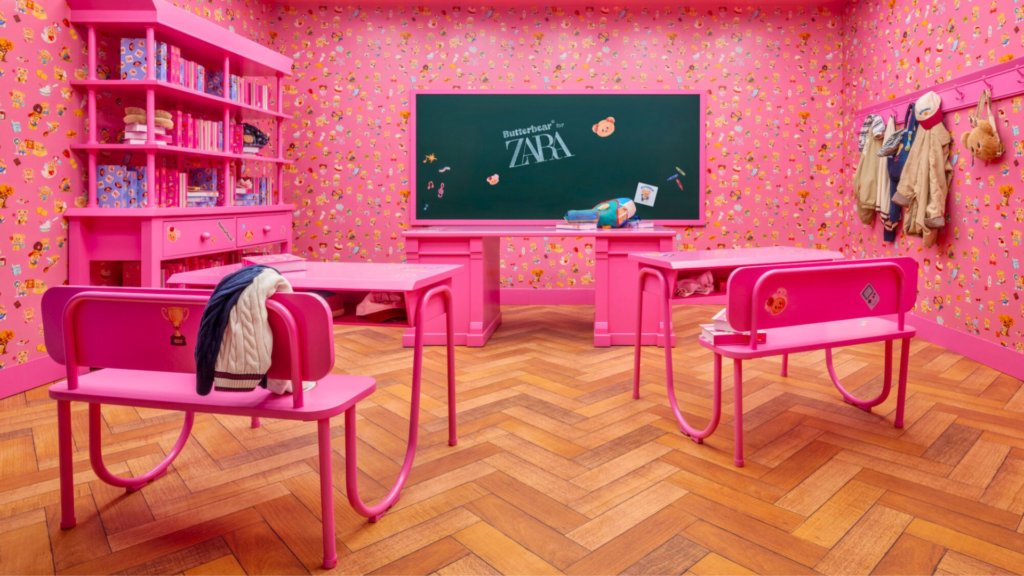
Behavior-oriented retail store design
Store layout is far more than an aesthetic decision. It defines how consumers move, what they notice, and how they interact with products.
Consumers tend to follow natural movement flows while avoiding areas with visual clutter or obstacles. Based on this behavior, store design can strategically prioritize:
- Product placement in high-visibility zones
- Pathways that encourage exploration
- Layouts that reduce search effort
Great retail design does not call attention to itself — it simply works. It guides consumers intuitively, simplifies the journey, and increases conversion opportunities.
Sensory stimuli and retail neuroscience
The brain responds to more than visuals. Retail experiences are multisensory, and each sense activates different neural responses that influence perception and behavior.
Within physical retail customer experience, sensory stimuli can be intentionally designed:
- Vision: colors, lighting, and organization shape quality perception
- Sound: music influences emotional state and dwell time
- Smell: fragrances are deeply connected to memory and emotion
- Touch: product interaction increases perceived value and trust
The key is consistency. Sensory elements must align with brand positioning to avoid confusion and create coherent experiences.
When strategically applied, sensory design not only improves customer experience but also subtly influences purchasing decisions more effectively.
Communication that speaks to the brain
At the point of sale, consumers process information quickly. They do not deeply analyze every detail — they scan and react.
Because of this, communication must be simple, direct, and easy to absorb. Long or complex messages increase cognitive effort and are often ignored. Retail neuroscience shows that the brain responds better to clear, visual, and emotionally relevant stimuli.
Important principles include:
- Reducing unnecessary information
- Using action-oriented language (“exclusive,” “limited,” “now”)
- Applying triggers such as social proof and scarcity
More than informing, communication inside the store should guide decisions and reduce friction throughout the journey.
Micro-decisions: how consumers decide throughout the journey
Purchasing decisions do not happen in a single moment. The customer journey is built through a sequence of small decisions, such as:
- Whether the environment is worth exploring
- Whether a product stands out
- Whether pricing feels reasonable
- Whether the experience feels trustworthy
These micro-decisions are often underestimated, but they are heavily influenced by the surrounding environment. Small adjustments in retail design can significantly impact final outcomes.
For brands seeking to influence purchasing behavior, the focus should be on these interaction points. Reducing friction, simplifying comparisons, and creating smoother journeys significantly improve conversion performance.
The future of retail neuroscience
Retail is evolving from a transactional model into an experiential one. In this transformation, understanding human behavior becomes one of the most important competitive advantages.
The future of retail neuroscience lies in the integration of behavior, technology, and data. Advanced analytics tools make it possible to understand patterns with greater precision, while personalization creates more relevant experiences.
At the same time, the role of physical retail continues to evolve. Stores are no longer simply sales channels — they are becoming environments for connection, experimentation, and brand-building.
In this scenario, investing in neuroscience-based retail strategies is no longer just a trend. It is essential for brands that want to remain relevant, improve performance, and build stronger long-term customer relationships.
Inscreva-se em nossa Newsletter
Receba no seu email todas as novidades do nosso blog sobre tecnologia e varejo, além de ficar por dentro do novos projetos Alice Wonders.
Thank you for subscribing.
Something went wrong.
Respeitamos sua privacidade e levamos a sério a sua proteção