

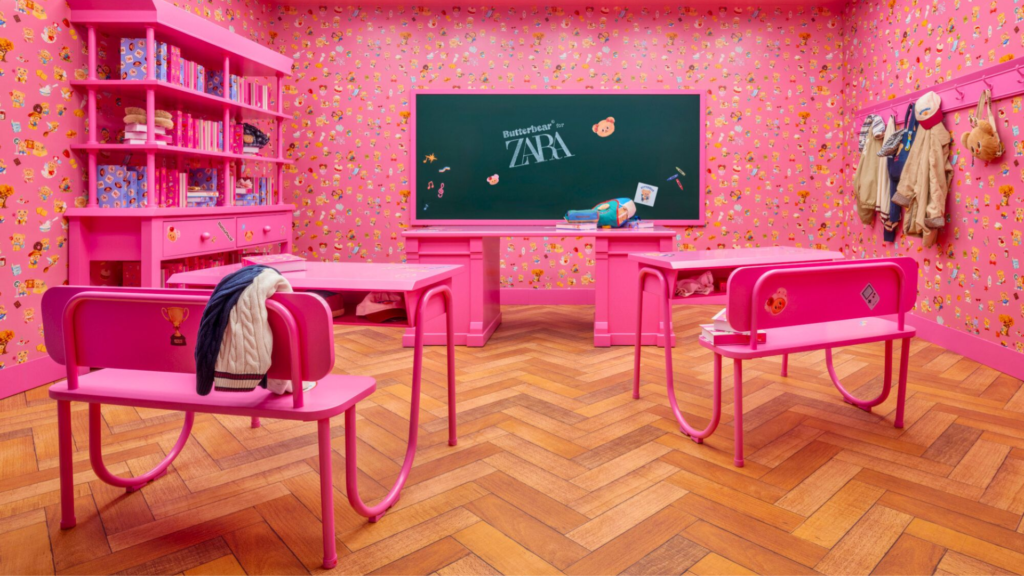
Anemoia in retail has become a powerful strategy for creating emotional connections with consumers. In an increasingly digital and fast-paced world, brands need to go beyond products and deliver memorable, sensory, and emotionally meaningful experiences.
Within this context, one concept has been gaining traction in retail marketing strategies: anemoia — a sense of nostalgia for times we never actually lived through, yet still feel emotionally connected to. It sparks curiosity and a desire to experience the aesthetics, emotions, and cultural atmosphere of past decades.
Whether through 80s and 90s visual references, vintage soundtracks, retro packaging, or environments inspired by other eras, brands are discovering how nostalgia can evoke deep emotions and strengthen customer relationships.
By combining emotional memory, storytelling, and strategic spatial design, physical retail becomes something beyond shopping: a true retail experience. And it is precisely this emotional connection that can increase dwell time, engagement, and purchase intention.
With that in mind, let’s explore the concept of anemoia and understand how nostalgia can be applied in retail to create emotional in-store experiences and drive stronger sales performance.
What Is Anemoia and Why Does It Influence Consumer Behavior?
Anemoia can be defined as nostalgia for a time we never directly experienced. Unlike traditional nostalgia, it emerges from the idealization of aesthetics, behaviors, music, objects, and cultural experiences we know through media, the internet, or shared social references.
In consumer behavior, this feeling is strongly connected to the desire for emotional comfort and familiarity. In a world shaped by information overload and increasingly fast interactions, experiences that evoke warmth and emotional memory tend to generate immediate identification.
That is why nostalgia in consumer experiences has become such a powerful tool for brands seeking more human connections. The rise of vintage trends, analog cameras, vinyl records, retro cafés, and designs inspired by past decades shows how consumers are searching for emotionally meaningful experiences.
Within retail marketing, this strategy becomes even more impactful because it transforms the physical environment into a space of emotion, discovery, and belonging — something digital channels alone struggle to replicate.
A study conducted by PiniOn, a market research company, and published in October 2025 by Consumidor Moderno revealed that 56.8% of Brazilians have made purchases motivated by memories of the past.
This demonstrates how nostalgia can be as powerful as desire and scarcity, creating emotional sensations that directly influence consumer decision-making, including purchasing behavior.
How to Apply Anemoia in Retail to Create More Emotional Experiences
Applying the concept of anemoia in physical retail may seem challenging at first, but it becomes more accessible when combined with other retail concepts, such as Store Living.
This approach transforms the point of sale into a living, hybrid, and emotionally relevant environment. Rather than purely commercial spaces, stores become places for connection, discovery, and interaction, where design, sensory experiences, and brand storytelling work together to create emotional identification.
By combining nostalgic references with comfort, lifestyle, and interactivity, physical retail can deliver experiences that increase dwell time, strengthen branding, and foster deeper relationships between people and brands.
Below are some anemoia-driven strategies that can be applied in-store.
Retro Design and Spatial Atmosphere
The physical environment plays a central role in emotional storytelling. Elements such as warm lighting, vintage furniture, retro typography, cozy textures, and nostalgic soundtracks help create atmospheres capable of evoking emotional memories — even for consumers who never lived during those decades.
This strategy has been widely used in retail experience projects, especially in concept stores, cafés, and Instagrammable environments. The goal is not only to create visually appealing spaces, but also to stimulate emotions that encourage consumers to stay longer and build emotional relationships with the brand.
Beyond retro aesthetics, technology has expanded brands’ ability to create immersive and emotionally engaging experiences. Interactive projections, artificial intelligence, sound design, dynamic lighting, and responsive environments help transform physical spaces into multisensory experiences.
In practice, consumers do not simply observe the environment — they feel, interact, and create memories within it, which is essential for emotional retail experience strategies.
Storytelling and Brand Identity
Nostalgia should not exist only within physical spaces. It also needs to be reflected in brand storytelling, campaigns, and product presentation because every element of a brand communicates something.
Brands that understand how to use nostalgia in retail know the goal is not to literally recreate the past, but to reinterpret cultural symbols in contemporary and relevant ways.
Retro-inspired packaging, capsule collections, themed activations, and campaigns that revive emotional references are highly effective strategies for creating instant emotional identification between brands and consumers.
Emotional storytelling strengthens the feeling of belonging because it allows consumers to perceive the brand as part of a collective memory. And when emotional connection exists, consumption becomes experiential rather than purely rational.
Sensory and Interactive In-Store Experiences
Creating emotional in-store experiences depends directly on sensory stimuli. Music, scent, lighting, textures, and interaction all influence how consumers perceive environments and connect with brands.
In the context of anemoia, these elements intensify nostalgic feelings and make the experience more immersive. A scent associated with childhood memories, a playlist inspired by a specific decade, or retro decorative objects can evoke emotions capable of increasing dwell time and encouraging organic social sharing.
From a neuroscience perspective, nostalgic experiences activate brain regions associated with emotion, reward, and belonging. Sensory stimuli such as smell, music, and emotionally charged imagery can strongly access emotional memories and generate positive responses in the brain.
In retail, this emotional connection directly influences perceived value, time spent in-store, and purchase intention. That is why brands investing in sensory experiences can create more memorable environments and increase consumer engagement organically.
More than aesthetics, these strategies are about business performance. Effective design, storytelling, and sensory interactions create memorable experiences that strengthen branding, amplify engagement, and contribute directly to brand perception.
The Future of Emotional Retail
The future of physical retail is increasingly connected to experience, emotion, and meaning. In a market where products can easily be replicated, differentiation depends on a brand’s ability to create genuine human connection.
In this scenario, anemoia emerges as a strategic tool for transforming commercial spaces into emotional, welcoming, and memorable environments. By combining aesthetics, narrative, and sensory design, brands can create experiences that remain in consumers’ memories long after the purchase.
In the future of retail, technology and emotion will no longer operate separately. The most relevant brands will be those capable of combining data, sensory experiences, and human behavior to create increasingly personalized, emotional, and memorable spaces.
In this context, anemoia evolves beyond an aesthetic trend and becomes a true emotional connection strategy for contemporary retail. More than a passing movement, nostalgia is consolidating itself as a powerful resource for strengthening branding, increasing engagement, and building deeper relationships between brands and consumers.
Inscreva-se em nossa Newsletter
Receba no seu email todas as novidades do nosso blog sobre tecnologia e varejo, além de ficar por dentro do novos projetos Alice Wonders.
Thank you for subscribing.
Something went wrong.
Respeitamos sua privacidade e levamos a sério a sua proteção