
Fan Zone in Retail: How to Turn Stores into Spaces for Engagement and Community 0 22

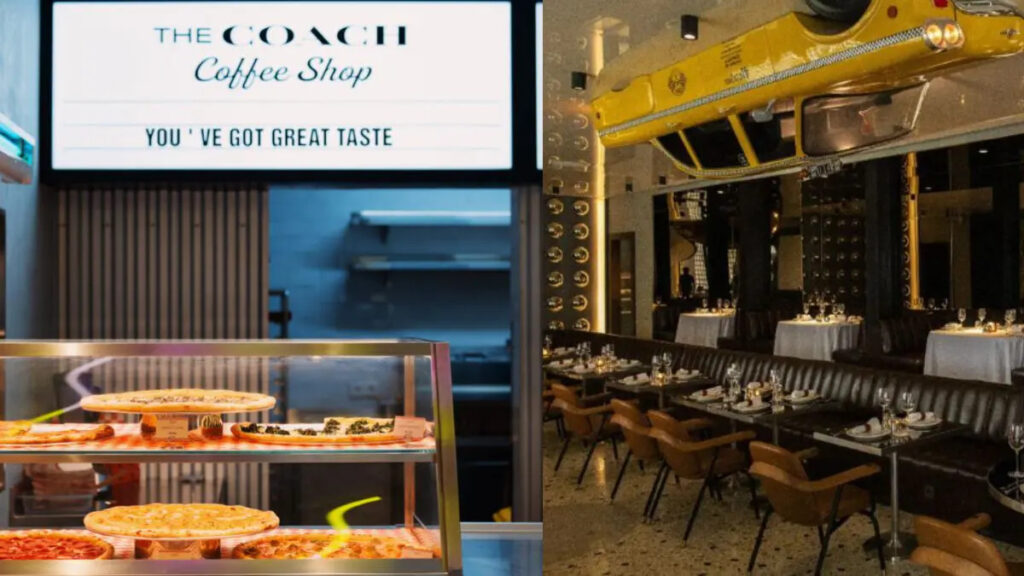
Fan zone in retail combining a branded café and immersive dining experience to strengthen community engagement and customer connection.

The concept of a Fan Zone in retail is transforming how brands use physical stores to drive engagement, emotional connection, and a sense of community. In a landscape shaped by digital consumption and the growth of e-commerce, companies are competing for something far greater than sales: attention, relevance, and long-term customer relationships.

It is within this context that the concept of a Fan Zone in retail is gaining momentum. Traditionally associated with sporting events, music festivals, and entertainment experiences, the Fan Zone model has emerged as a strategy capable of transforming the relationship between consumers and brands within physical environments.

This movement reflects a broader transformation in retail experience itself. Rather than purely transactional spaces, there is growing demand for environments capable of generating sensory stimulation, emotional connections, and shareable experiences.

As a result, the concept of the physical store as an experience hub has become increasingly important. While digital channels deliver convenience and speed, physical environments are taking on a strategic role tied to human interaction, emotional memory, and brand immersion.

In this scenario, the Fan Zone in retail emerges as one of the most effective strategies for transforming stores into spaces for relationships, engagement, and community building. Fan Zones represent one of the most compelling ways to make this vision a reality.

What Is a Fan Zone in Retail and Why Has This Concept Become So Relevant?

The Fan Zone concept first appeared at major sporting events, music festivals, and entertainment experiences. Its purpose was to create complementary environments around the main event, offering interactions, activations, content, and collective experiences that extended audience engagement. Over time, these spaces evolved from support areas into central elements of the overall experience.

The success of this model is directly linked to the sense of belonging it creates. In a Fan Zone, people are not simply consuming a product or attending an event—they are sharing emotions, creating memories, and reinforcing social connections. There is a strong emotional component embedded in these experiences, which is precisely what makes the concept so powerful for brands.

Neuroscience helps explain this behavior. Collective experiences tend to activate brain mechanisms associated with emotional rewards, social pleasure, and emotional memory formation. When consumers experience positive moments together, their brains naturally associate those feelings with the brand present in the environment. This increases perceived value, brand recall, and emotional affinity.

At the same time, consumer behavior has changed. Today’s audiences—especially digitally connected generations—are increasingly seeking authentic experiences and brands they can identify with. As a result, Fan Zone initiatives in retail have become highly relevant by creating experiences that foster identification and belonging. In this context, the concept becomes extremely strategic.

What was once limited to stadiums and festivals is now being applied to physical stores, pop-ups, trade shows, and hybrid spaces. Brands have realized they can leverage the principles of Fan Zones to create more vibrant, participatory, and relationship-driven environments. This fuels a new vision of retail experience in which consumers are no longer passive buyers but active participants in the brand story.

This trend is also closely connected to the concept of Fantailing, which is increasingly shaping discussions about the future of retail. Fantailing proposes a shift from traditional consumer relationships toward models built around fans, communities, and emotional engagement. Instead of simply selling products, brands create ecosystems of identity and belonging that strengthen loyalty and long-term relationships.

According to research highlighted by Harvard Business Review, brand communities strengthen feelings of belonging and increase consumer engagement, making emotional connection a significant competitive advantage for companies investing in in-person experiences.

Why Does Physical Retail Need to Become More Experiential?

Digital transformation has radically changed the way people shop. Today, almost any product can be purchased within seconds, with convenience and efficiency. The Fan Zone in retail responds to this challenge by transforming commercial spaces into meeting points between brands and consumers.

This is why the role of the physical store as an experience destination continues to grow. If consumers can satisfy functional needs online, physical environments must provide something digital channels cannot fully replicate: human interaction, sensory engagement, product exploration, and emotional connection.

This shift has fueled the rise of experiential retail, a model that transforms stores into spaces for entertainment, relationships, and emotional memory creation. More than selling products, physical locations now deliver meaningful experiences. This has become especially important as consumers increasingly value purpose, authenticity, and identification with brands.

Technology also plays an important role in this transformation. Tools such as augmented reality, smart fitting rooms, gamification, data intelligence, and immersive activations help make retail experiences more personalized and engaging. However, technology alone is not enough. It is the combination of technology and human connection that truly strengthens the Fan Zone concept in retail.

In this context, the Fan Zone in retail emerges as a strategic solution for making stores more relevant and memorable. When brands successfully combine entertainment, interaction, and belonging, they create compelling reasons for consumers to spend time in physical spaces.

How to Implement a Fan Zone in Retail

Putting this concept into practice may seem complex at first, but several elements can be naturally integrated into the point of sale to create spaces that encourage exchange, admiration, and meaningful interaction between brands and consumers.

The Physical Store Becomes More Than a Point of Sale

Implementing a Fan Zone in retail is not simply about creating an attractive or “Instagrammable” space. The real value lies in developing environments that genuinely encourage social interaction, participation, and emotional connection.

One of the most significant shifts in retail experience is the evolving role of the store itself. Physical spaces are no longer limited to product displays—they become social environments. Cafés, lounges, community areas, and interactive spaces encourage longer visits and make experiences feel more natural and comfortable.

Within this model, the physical store as an experience destination takes on a new dimension. It integrates lifestyle, relationships, services, and entertainment into a single environment. Consumers visit not only to shop but also as part of their routines and identities.

Participatory Experiences Strengthen Engagement and Connection

Participatory experiences play a critical role in community building. Workshops, sensory activations, themed events, live demonstrations, and immersive experiences transform consumers into active participants in the brand experience. These interactions deepen emotional involvement and reinforce perceptions of authenticity.

Gamification has also become an important tool within experiential retail. Interactive challenges, rewards, and engagement mechanics stimulate participation while creating more memorable experiences. From a neuroscience perspective, reward systems activate dopamine-related pathways associated with pleasure and motivation, increasing both engagement and emotional retention.

Technology and Personalization Drive Community Building

Rather than simply telling stories, brands must create experiences rooted in listening and understanding their audiences. In practice, this means using technology and data intelligence to adapt experiences based on consumer interests and preferences. Personalized recommendations, targeted activations, and real-time interactions make retail experiences more relevant and human.

Community building also depends on consistency. This is why many brands invest in recurring events, membership programs, exclusive experiences, and themed gatherings. The more continuous touchpoints a brand creates, the stronger the emotional relationship with consumers becomes.

In this environment, the Fan Zone in retail evolves beyond a one-time activation strategy and becomes an ongoing relationship-building tool. The store transforms into a space for interaction, shared experiences, and collective identity.

The Future of Retail Is Community-Driven

In an era defined by information overload and intense competition, brands that successfully build communities occupy a far more meaningful place in consumers’ lives. The physical store as an experience destination evolves from a commercial venue into a space for connection, interaction, and identity expression.

Despite all technological innovation, the most important differentiator will continue to be a brand’s ability to create authentic emotional connections. Ultimately, consumers do not simply want to buy products. They want to feel that they belong, participate in meaningful experiences, and connect with brands that reflect their identities.

This demonstrates that the future of experiential retail will become increasingly human-centered, relationship-driven, and community-focused. The growth of the Fan Zone in retail concept highlights how physical stores are taking on a new role within the consumer journey.

In this landscape, investing in retail experience means understanding that consumers seek emotional connection, interaction, and memorable moments. Competitive advantage is no longer found solely in products but in a brand’s ability to create meaningful experiences and foster communities.

By combining technology, personalization, entertainment, and human relationships, experiential retail transforms the traditional role of physical stores and strengthens long-term connections with audiences. The evolution of the Fan Zone in retail concept demonstrates that the future of brick-and-mortar retail lies in creating environments that encourage interaction, belonging, and emotional value.

In the future, the strongest brands will not necessarily be those that sell the most, but those that create meaning, connection, and belonging. In the new era of retail experience, consumers are no longer simply customers—they become active members of the communities brands build.

Inscreva-se em nossa Newsletter

Receba no seu email todas as novidades do nosso blog sobre tecnologia e varejo, além de ficar por dentro do novos projetos Alice Wonders.

Thank you for subscribing.

Something went wrong.

Previous ArticleNext Article

Deixe uma resposta

O seu endereço de e-mail não será publicado. Campos obrigatórios são marcados com *

Common store design mistakes that harm the consumer experience 0 393

consumer experiencing frustration during the shopping journey inside a fashion retail store

Store design has become a strategic factor in creating more fluid, intuitive, and memorable experiences in physical retail. More than simply displaying products, stores need to strengthen brand perception, create emotional connections, and improve the customer journey throughout the point of sale.

With this in mind, store design plays a central role in shaping customer experience and business performance. Even so, many retailers still make mistakes that directly impact the shopping journey.

Visually cluttered environments, confusing layouts, disorganized communication, and uncomfortable spaces can create frustration, reduce dwell time, and negatively affect conversion rates. In many cases, small structural mistakes end up compromising the entire retail customer experience.

For this reason, understanding the main mistakes in physical store design is essential to creating more strategic, efficient, and consumer-centered environments. In this article, we explore the most common flaws in physical retail and how to fix them to transform the point of sale into a more functional, enjoyable, and experience-driven environment.

Why does store design directly influence the shopping experience?

To begin with, it is important to understand that the physical environment influences far more than just the aesthetic side of an operation when we talk about the shopping experience. In retail, every element within the space — from lighting to circulation flow — affects how consumers perceive the brand, navigate the store, and make purchasing decisions.

That is why investing in store design also means investing in strategy, customer experience, and commercial performance. The in-store experience is built through visual, sensory, and functional stimuli. When the environment is intuitive and well planned, consumers feel more comfortable exploring products, spending time in the store, and interacting with the brand.

On the other hand, confusing or poorly designed environments create friction throughout the journey and may drive potential customers away. Within this context, concepts such as Store Living have gained relevance in retail by promoting more dynamic, fluid, and multifunctional stores capable of integrating experience, social interaction, and lifestyle into the same environment.

More than shopping spaces, stores are becoming connection points between consumers and brands, reinforcing the importance of designing physical environments strategically and centered on human behavior.

In addition, the physical space has become an important competitive differentiator in an increasingly omnichannel landscape. Today, consumers expect consistent experiences between physical and digital channels, making it even more important to think about the customer journey within the point of sale in an integrated and strategic way.

5 common store design mistakes that compromise the customer journey

There is a lot of discussion about strategies and best practices to improve the customer experience at the point of sale, but mistakes are also common — and understanding them is just as important in order to avoid them or know how to adjust the strategy if they happen. With that in mind, here are five key mistakes worth discussing:

Excessive visual information and disorganized communication

One of the most frequent mistakes in physical retail is visual clutter. Too many signs, promotional campaigns, colors, prices, and simultaneous messages make the environment difficult to read and cognitively overload consumers. Instead of simplifying the buying decision, the space creates confusion and a sense of disorganization.

Consumer neuroscience shows that visually overloaded environments increase cognitive effort and make decision-making more difficult. This means that when consumers receive too many stimuli at once, the brain tends to generate fatigue and discomfort, reducing dwell time and purchase intent.

When there is no clear communication hierarchy, customers struggle to identify priorities, locate categories, or understand relevant offers. This directly impacts the retail customer experience and reduces the store’s efficiency as a conversion environment.

To avoid this problem, it is essential to invest in strategic visual communication and a layout specifically designed for the business, with clearer messaging, better category organization, and a more balanced distribution of elements throughout the space.

Poor circulation flow and navigation difficulties

The store layout directly influences how people move, discover products, and interact with the environment. Narrow aisles, poorly positioned furniture, and congested areas compromise the fluidity of the experience and make navigation exhausting.

This type of issue is especially critical because it affects customer autonomy during the shopping process. When customers do not intuitively understand where to go or encounter obstacles along the way, they are more likely to reduce the amount of time spent in the environment.

This logic also connects with the Store Living concept mentioned earlier, in which the environment is no longer simply a space for quick circulation but instead encourages discovery, interaction, and longer stays.

To achieve this, store flow must be intuitive, comfortable, and designed to create a more natural and less tiring experience for consumers. Thinking about the customer journey within the point of sale means creating more fluid, accessible, and behavior-oriented spaces.

Inadequate lighting and an environment disconnected from the brand

Lighting is one of the most important factors in environmental perception and product presentation. Even so, many retail operations still rely on overly cold lighting, dark spaces, or generic illumination without considering the emotional impact of the experience.

In addition to harming comfort and visibility, an environment that does not align with the brand positioning can create disconnection throughout the experience. A premium store, for example, will hardly communicate sophistication in a visually uncomfortable or poorly lit environment.

According to the study Impact of Quality of Light on Retail Sales, strategic lighting can significantly increase perceived product value, improve customer experience, and directly impact retail sales performance.

This proves that proper lighting goes far beyond aesthetics. Lighting should be considered a strategic tool within store design, helping create more engaging atmospheres, directing customer attention, and reinforcing brand identity.

Lack of integration between physical and digital experiences

Even with the advancement of omnichannel retail, many brands still operate physical and digital channels separately. Inconsistent communication, disconnected promotions, and difficulties with exchanges or pickups compromise the experience and create frustration among consumers.

Today, customers expect continuity between channels. The experience must remain fluid regardless of the brand touchpoint. When this does not happen, retailers create a perception of disorganization and reduce trust in the operation.

Technology also plays an important role in creating more fluid experiences within physical retail. Solutions such as digital signage, interactive maps, RFID, real-time inventory integration, and traffic analysis through sensors help brands better understand consumer behavior and optimize the customer journey inside the store.

For this reason, understanding how to improve the customer experience in physical retail also involves integrating technology, service, and communication more consistently across all channels used to attract, convert, and retain customers.

Uncomfortable and inaccessible environments

Another common mistake is ignoring comfort and accessibility factors. Tight spaces, excessive obstacles, uncomfortable temperatures, noise, or difficult circulation make the experience exhausting and unwelcoming.

In addition to affecting dwell time and perceived quality, non-inclusive environments limit access for different consumer profiles. This demonstrates a lack of attention to the real needs of customers and negatively impacts the shopping experience as a whole.

Creating more accessible, ergonomic, and intuitive environments is an essential part of any strategy focused on customer experience in retail. Consumers can clearly identify when a space has been designed to welcome people in a democratic and accessible way.

Like many other areas related to customer experience, there are several mistakes that can happen in physical store design. However, these are some of the most common ones and can already help create a clearer understanding of what to avoid and how to rethink strategies in order to deliver the best possible experience to consumers.

Transforming the physical space into a strategic, customer-focused experience

Correcting the main mistakes in physical store design does not necessarily require major renovations, but rather a more strategic perspective focused on behavior, experience, and functionality. In many cases, small adjustments in visual communication, flow, lighting, or ambience can significantly transform consumer perception.

In today’s landscape, physical retail must go beyond product display and act as a space for connection, discovery, and relationship-building. This requires projects that consistently integrate branding, architecture, customer experience, and consumer behavior.

In addition, the use of data and behavioral intelligence allows retailers to create more personalized and strategic in-store experiences. By analyzing circulation patterns, dwell time, and product interactions, brands can optimize layout, communication, and ambience with greater precision and focus on customer experience.

By understanding how to improve the customer experience in physical retail, brands can create more intuitive, enjoyable, and expectation-driven environments, strengthening perceived value, competitive differentiation, and business performance.

Inscreva-se em nossa Newsletter

Receba no seu email todas as novidades do nosso blog sobre tecnologia e varejo, além de ficar por dentro do novos projetos Alice Wonders.

Thank you for subscribing.

Something went wrong.

Retail Media In-Store: Strategies to Monetize Physical Retail 0 353

retail media in-store with interactive digital display in a physical fashion retail store

Retail media in-store is transforming physical retail into an ecosystem driven by media, data, and monetization. More than just a visibility channel, the point of sale is becoming a strategic platform capable of generating incremental revenue, personalizing experiences, and strengthening the connection between brands and consumers.

This shift requires a significant change in mindset. It is no longer simply about adding screens or creating new advertising spaces, but about building an ecosystem where data, media, and customer experience operate in an integrated and measurable way.

For companies that have already moved beyond the initial understanding of the concept, the challenge is now far more sophisticated. Retailers must create operations capable of collecting high-quality data, activating campaigns intelligently, accurately measuring impact, and, most importantly, transforming these capabilities into a scalable monetization model.

In this context, the physical store is no longer a passive environment. Instead, it becomes a dynamic platform where every interaction can be interpreted, optimized, and converted into value — both for retailers and brand partners.

Data Architecture for Retail Media In-Store

Building a consistent retail media in-store strategy depends directly on data management maturity. Unlike digital environments, where data collection is naturally structured, physical retail requires deeper instrumentation and integration to transform interactions into actionable insights.

The biggest opportunity lies precisely in capturing behavioral signals within context — something digital channels alone cannot achieve with the same depth.

Identifying Truly Actionable Data

In physical retail, data relevance is directly connected to the ability to translate behavior into intent. Information such as foot traffic, movement patterns, dwell time in specific areas, and interaction with products or digital displays creates a richer understanding of the customer journey inside the store.

When combined with transactional data — such as SKU sell-out performance, purchase timing, and recurrence — retailers can understand not only final outcomes, but also the factors influencing purchasing decisions.

Additionally, loyalty programs and CRM systems add another contextual layer, connecting physical behavior with consumer history. This enables retail media to evolve from mass exposure into a more precise approach based on real behavioral patterns.

Building a Data Layer for Physical Retail

To generate value, retailers must structure an architecture capable of continuously capturing, processing, and activating data. In physical retail, this involves integrating multiple sources — sensors, cameras, POS systems, apps, and digital platforms — into a unified data layer.

This process is complex and requires consistency, quality, and standardization, especially when scaling operations. An effective data layer depends on clear processing flows where captured data is enriched, connected to CDPs, and activated across campaigns and analytics platforms.

Even without direct consumer identification, retailers can leverage behavioral modeling and segmentation based on navigation and interaction patterns. This ability to transform anonymous data into strategic insights is what supports the evolution of retail media measurement in physical stores.

Data Governance and Privacy as Strategic Assets

Data governance in physical retail should not be treated solely as a legal requirement, but as a strategic operational component. Responsible data management has become increasingly essential in today’s market.

Compliance with privacy regulations and transparent consent practices helps build consumer trust — a critical asset in a highly data-driven environment. More than reducing risks, companies with strong governance structures can operate more securely and maximize the value extracted from their data ecosystems.

This balance between protection and intelligent usage is essential for sustainable retail media initiatives, especially when integrating physical and digital channels. Consumer trust directly impacts the quality of collected data and, consequently, the effectiveness of media strategies.

Technologies Enabling Retail Media In-Store

Technology is the primary enabler of retail media in-store and simultaneously one of the greatest competitive differentiators between mature retail operations and those still in early stages.

The real value lies not in isolated tools, but in the integration of multiple technology layers into a cohesive system capable of transforming data into decisions and experiences into measurable results.

Physical Layer (Hardware)

The physical layer represents the direct interaction point with consumers and includes devices that collect data and deliver communication. Digital screens, sensors, cameras, beacons, and electronic shelf labels create an infrastructure capable of transforming retail spaces into responsive and interactive environments.

However, simply deploying these technologies does not guarantee effectiveness. Strategic positioning, integration with data, and alignment with the customer journey are critical for these assets to contribute meaningfully to retail media performance.

In this context, the point of sale becomes a sensory environment where visual and contextual stimuli directly influence consumer behavior. Technology therefore does not merely enable communication — it reshapes how consumers perceive and interact with the retail space.

Logical Layer (Software and Intelligence)

If the physical layer is responsible for execution, the logical layer enables scalability and optimization. Media management platforms, analytics systems, BI tools, and CDPs create the foundation for transforming the point of sale into a data-driven environment operating with digital-like logic.

This structure makes it possible to segment audiences, personalize campaigns, monitor performance in real time, and continuously optimize strategies. Integration across platforms remains one of the greatest challenges — and also one of the biggest opportunities.

When implemented effectively, this integration connects data from multiple customer touchpoints, creating a unified consumer view and expanding measurement capabilities. This is essential for evolving retail media KPIs beyond simple exposure metrics into indicators tied to behavior and sales impact.

The Role of AI and Neuroscience

Artificial intelligence acts as a catalyst for this transformation by analyzing large volumes of data and enabling automated real-time decisions. With AI, retailers can dynamically adjust screen content according to traffic patterns, store profiles, schedules, weather conditions, or seasonality.

When combined with neuroscience principles, this technology reaches an even more advanced level. Research shows that most purchasing decisions happen subconsciously, influenced by sensory and contextual stimuli.

Elements such as color, movement, repetition, and positioning directly affect attention and memory. By using data to understand behavior and strategically applying these stimuli, retailers can create experiences that do more than inform — they subtly and effectively influence decisions.

This is one of the most powerful aspects of retail media in-store: the ability to combine technology and human behavior to create more relevant interactions while reducing noise and increasing conversion.

Measurement and Attribution: The Competitive Advantage

Generating data is extremely valuable in modern retail, but measuring and attributing results correctly is equally important. Measurement is what transforms retail media in-store into a sustainable business model.

Without the ability to prove impact, physical retail media remains limited to exposure logic similar to traditional trade marketing.

Defining Relevant KPIs

Within retail media KPIs, the focus shifts from reach metrics to indicators that demonstrate direct business impact. Incremental sales uplift, for example, helps identify how campaigns truly influence purchasing behavior.

Conversion rates by exposure reveal communication efficiency, while ROI consolidates the relationship between investment and return. These indicators require structured and integrated data capable of connecting media exposure to purchasing behavior — one of the biggest challenges in retail media measurement.

Attribution Methods in Physical Retail

Unlike digital environments, where attribution is more direct, physical retail requires adapted methodologies. A/B testing between stores, control groups, and correlation analyses are some of the approaches used to isolate media impact.

Although more complex, these methodologies provide deeper insights that strengthen operational credibility and support better decision-making. Consistent measurement capabilities are what sustain the evolution of retail media in-store as a strategic investment channel.

Closing the Loop with Brand Partners

The consolidation of this model depends on the retailer’s ability to transform data into perceived value for brands. This means delivering not only reports, but also actionable insights that guide future decisions.

When retailers clearly demonstrate campaign impact on sales and consumer behavior, monetization opportunities expand significantly. This closed-loop model is essential for turning retail media into a profitable investment rather than simply another operational cost.

Trends Redefining Physical Retail Media

The future of retail media in-store is directly connected to technological evolution and omnichannel integration. Programmatic physical media, scalable personalization, and unified omnichannel data are trends reshaping how retail operates.

Within this scenario, the concept of the Brand Ship Store gains relevance as an evolution of the traditional flagship store. More than showcasing products, these environments combine community, content, services, and technology to create deeper consumer connections.

The store becomes a relationship hub capable of generating continuous engagement and strengthening branding. Examples include spaces offering workshops, events, immersive experiences, and personalized services that go far beyond transactional interactions.

Technology plays a central role by connecting these experiences to measurable data and enabling personalization. In this context, retail media in-store becomes part of the experience itself, contributing simultaneously to brand value and revenue generation.

Conclusion

The point of sale is undergoing a structural transformation, evolving from a conversion channel into an integrated platform for media, data, and customer experience. The growth of retail media in-store reflects a broader shift in the role of retail, which is increasingly becoming an active player within the media ecosystem.

Companies capable of integrating technology, data, and behavioral intelligence build operations that are more efficient, measurable, and scalable. The combination of retail media measurement, strategic data usage, and neuroscience principles enables retailers not only to improve campaign performance, but also to elevate the overall consumer experience.

In this new landscape, competitive advantage will belong to companies capable of transforming the point of sale into an intelligent environment where every interaction generates learning, every campaign drives measurable results, and every experience strengthens the relationship between brands and consumers.

Inscreva-se em nossa Newsletter

Receba no seu email todas as novidades do nosso blog sobre tecnologia e varejo, além de ficar por dentro do novos projetos Alice Wonders.

Thank you for subscribing.

Something went wrong.

Most Popular Topics

Editor Picks

Send this to a friend